
Table of Contents
- Why Black-Owned Card Games Belong on Your Game Night
- A Practical Framework for Choosing Black-Owned Card Games
- How to Verify a Game Is Actually Black-Owned
- Best Black-Owned Party Games for Adult Groups
- How to Support Black-Owned Game Companies Beyond Buying
- What to Look For in Components, Rules, and Replay Value
- Conclusion
- Frequently Asked Questions
Last Updated: October 5, 2026
Why Black-Owned Card Games Belong on Your Game Night
Game night works best when everyone sees themselves in the game.
A good card game gets people laughing and teaches something worth keeping. Games made by Black-owned companies often do both, folding in Black heritage, financial literacy, and shared stories while staying fun enough to replay.
So how do you pick well? Match the game to your group, check the content, verify ownership, and compare what is in the box. The payoff is a game night people ask to repeat.
A Practical Framework for Choosing Black-Owned Card Games
Start with your group, not the game. The best pick is the one your players will finish and want again. Ask four questions before you buy:
- How many people are playing, and how much table space do you have?
- What ages are at the table, and what content is off-limits?
- Do you want quick rounds or a longer strategy session?
Answer those first, then filter games against your answers. This step prevents most bad purchases.
Match the Game to Your Group Size and Space
Player count decides more than most buyers expect. A bluffing or trivia game shines with six to ten people; a strategy game with assets and turns needs fewer players and more room.
Check the box for the stated player range and play time. A game built for eight feels thin with four players; a two-player strategy game leaves twelve people watching.
Check the Age Rating and Content Before You Buy
Age rating is not a formality. Adult party games can include drinking prompts, mature humor, or language you may not want around teenagers. Family games stay cleaner but may bore a room of adults.
Read the content notes, not just the age number. If you are mixing ages 15 and up with adults, look for games that scale their prompts so the whole table stays in play.
How to Verify a Game Is Actually Black-Owned
Most buyers skip this step, but "Black-owned" is a marketing claim, not a regulated label. No federal agency certifies it and no registry governs it, so the burden of proof sits with you. The good news: a transparent standard takes about ten minutes to apply.
A Four-Point Verification Standard
Use these four checks in order. A game that passes all four is verifiable; one that passes two or fewer is unverified, no matter what the listing says.
- A named founder or creator. The box, the website, or the brand's about page should name a specific person. "A Black-owned brand" with no name attached is a claim, not a fact. Look for a full name you can search.
- A documented company story. The about page should describe when and why the company started, not just what it sells. Specifics, a city, a year, a first prototype, are harder to fake than adjectives.
- A real business footprint. Check for a working contact method (email or phone), a physical or mailing address, and a direct-to-consumer store. A brand that only exists as a marketplace listing with no independent site is harder to verify.
- Independent corroboration. Search the founder's name plus the brand name. Look for press coverage, podcast interviews, local news features, or convention appearances. One independent mention is worth more than ten self-published posts.
Where to Look for Primary Sources
You do not need a paid database. These free sources do most of the work:
- The brand's own site. Start with the about page and the founder's bio. Cross-check the name against the contact page.
- Business registration records. Most states let you search business filings by entity name through the secretary of state's website. A registered entity with a named officer is a stronger signal than a social-media-only presence.
- The U.S. Patent and Trademark Office trademark database. If the brand has registered its name, the filing lists an owner. This is a public record and free to search.
Red Flags That Signal an Unverified Claim
Watch for these patterns. Any one of them should slow you down:
- No founder named anywhere on the site or box.
- An about page built entirely from stock phrases ("we believe in community") with no dates, places, or people.
- A brand that only appears on third-party marketplaces with no independent web presence.
- A contact form with no email address, phone number, or mailing address behind it.
How to Apply This to a Specific Game
Take Black Blocks Game as a worked example. The brand names its creator, David E. Rogers, on its site, maintains a direct-to-consumer store with a product page, and publishes a company story rather than a generic mission statement. Those three facts satisfy the first three checks. The fourth, independent corroboration, is the one you should run yourself before buying, using the search steps above.
If a listing claims Black ownership but names no founder and shows no story, treat it as unverified. Legitimate makers are usually proud to tell you who they are and why they built the game.
Best Black-Owned Party Games for Adult Groups
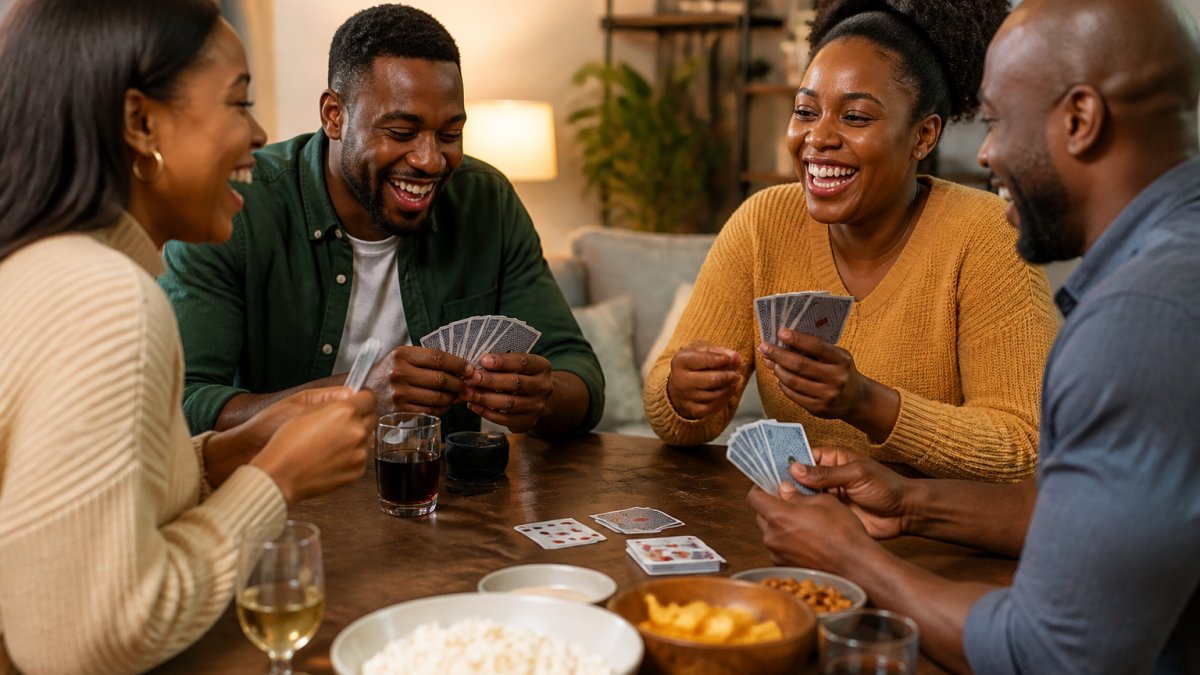
The best Black-owned party games for adult groups play fast, reward a full table, and carry real cultural weight. Trivia, charades, bluffing, and strategy games all fit, depending on your crowd.
The Six Data Points to Compare Before You Buy
Every game listing gives you enough to fill in these six fields. Pull them side by side and the choice usually makes itself.
- Player count. The stated minimum and maximum. A game built for 8-10 will feel thin at 4.
- Age range. The manufacturer's rating, plus a note on whether prompts scale for mixed ages.
- Play time. Per round and per session. A 15-minute round suits a party; a 90-minute session suits a planned game night.
- Complexity. How long the rules take to teach. Under five minutes is a party game; over fifteen is a strategy game.
- Content style. Trivia, bluffing, acting, strategy, or a hybrid. This is the single biggest predictor of whether your group will finish it.
- Price. Compare against what is in the box, not against other games in the abstract.
How the Major Styles Compare for Adult Groups
| Game Type | Best For | Typical Group Size | Typical Round Length | Teaching Time | Strength |
|---|---|---|---|---|---|
| Trivia | Culture and history buffs | 4-10 | 20-45 min | Under 5 min | Teaches while you play |
| Bluffing | Talkative, competitive groups | 5-10 | 15-30 min | Under 5 min | Keeps everyone guessing |
| Charades / acting | Loud, active parties | 6-12 | 10-20 min | Under 5 min | Fast and physical |
| Strategy | Focused, smaller tables | 2-6 | 45-90 min | 10-20 min | Deep, replayable rounds |
| Hybrid (strategy + trivia) | Mixed groups who want both | 3-8 | 30-60 min | 5-15 min | Fun and learning in one box |
Use the table as a filter. Six people wanting a 20-minute round rules out strategy and points to trivia or bluffing; four people wanting a longer session points to strategy or hybrid.
What to Check on Any Specific Game Page
Once you have narrowed to a style, confirm five things on the product page before you pay:
- The stated player range matches your actual group. Not the range you wish you had.
- The age rating matches the youngest player at the table. If you are mixing teens and adults, look for games that scale prompts.
- The play time matches the slot you have. A 90-minute game does not fit a weeknight drop-in.
- The components list is complete. Cards, score pad, timer, instructions. Missing pieces mean a scramble on game night.
A Worked Example
Black Blocks Game lands in the hybrid row. It blends strategy with financial literacy, so players build assets and handle market shifts while celebrating Black history, a strong pick for adults who want fun and learning in one box, and for mixed groups where some want depth and others want speed. You can see the full game and how it plays on the product page.

How to Support Black-Owned Game Companies Beyond Buying
Buying the game is step one. The bigger lift is helping these companies stay visible after launch. Small makers grow on word of mouth, not ad budgets.
Try these moves:
- Leave an honest review after you play.
- Post a photo from game night and tag the maker.
- Gift a game to a teacher, friend, or family member.
- Suggest the game to your school, church, or community group.
Each costs nothing but time, and together they keep a small game company in front of new buyers, how the best Black-owned party games reach the tables that need them.
What to Look For in Components, Rules, and Replay Value
Quality shows up in the details. Before you buy, scan the listing for what is included: game cards, answer cards, a score pad, a pencil, a sand timer, and clear instructions.
Then judge replay value. A game you can only play one way gets old fast, so look for variety in the cards and prompts.
Here is how the main game types compare for adult groups:
| Game Type | Best For | Group Size | Strength |
|---|---|---|---|
| Trivia | Culture and history buffs | 4-10 | Teaches while you play |
| Bluffing | Talkative, competitive groups | 5-10 | Keeps everyone guessing |
| Charades | Loud, active parties | 6-12 | Fast and physical |
| Strategy | Focused, smaller tables | 2-6 | Deep, replayable rounds |
Black Blocks Game lands in the strategy column with a learning twist.
Conclusion
The challenge is not finding a game, but finding one your group will actually play, learn from, and remember. Start with your players, verify the maker, and check what is in the box before you buy.
Black Blocks Game was built for exactly that kind of night. It pairs strategic gameplay with financial literacy and Black history, created by David E. Rogers with purpose and passion.
Frequently Asked Questions
What are some good Black card games for adults?
Black-owned card games for adults span trivia, bluffing, and strategy formats. Look for games that center Black culture and heritage while offering genuine gameplay depth. Some focus on history and trivia, others on financial literacy or party-style bluffing. Read the player count, age rating, and estimated play time before buying. A game rated for 15+ with 30-60 minute rounds works well for adult game nights, while shorter rounds suit larger groups.
How do I verify if a card game is Black-owned?
Start with the company's website and look for an 'About' page that names the founder and describes the company's mission. Check whether the brand has been covered by Black media outlets or community organizations. You can also search business registries for ownership details and look for the brand at Black-owned marketplaces or events. If a company is vague about who runs it or avoids naming its founder, that is a signal to dig deeper before buying.
What factors should I consider when choosing adult card games?
Player count matters most: some games work best with 3-4 people, others handle 8 or more. Check the age rating to confirm the content suits your group. Look at play time per round and whether the game supports repeat sessions without feeling stale. Component quality, including card stock and included items like score pads or timers, affects long-term value. Finally, match the theme to your group's interests, whether that is trivia, strategy, or party-style bluffing.
Are there Black-owned card games that focus on trivia and culture?
Yes. Several Black-owned game companies build their games around Black history, heritage, and cultural knowledge. These games often work as learning tools for classrooms, family reunions, and HBCU events alongside casual game nights. When evaluating them, check whether the questions are factually sourced and whether the game includes answer cards, score pads, and clear instructions. A well-made trivia game should be playable by mixed-age groups while still challenging adults.